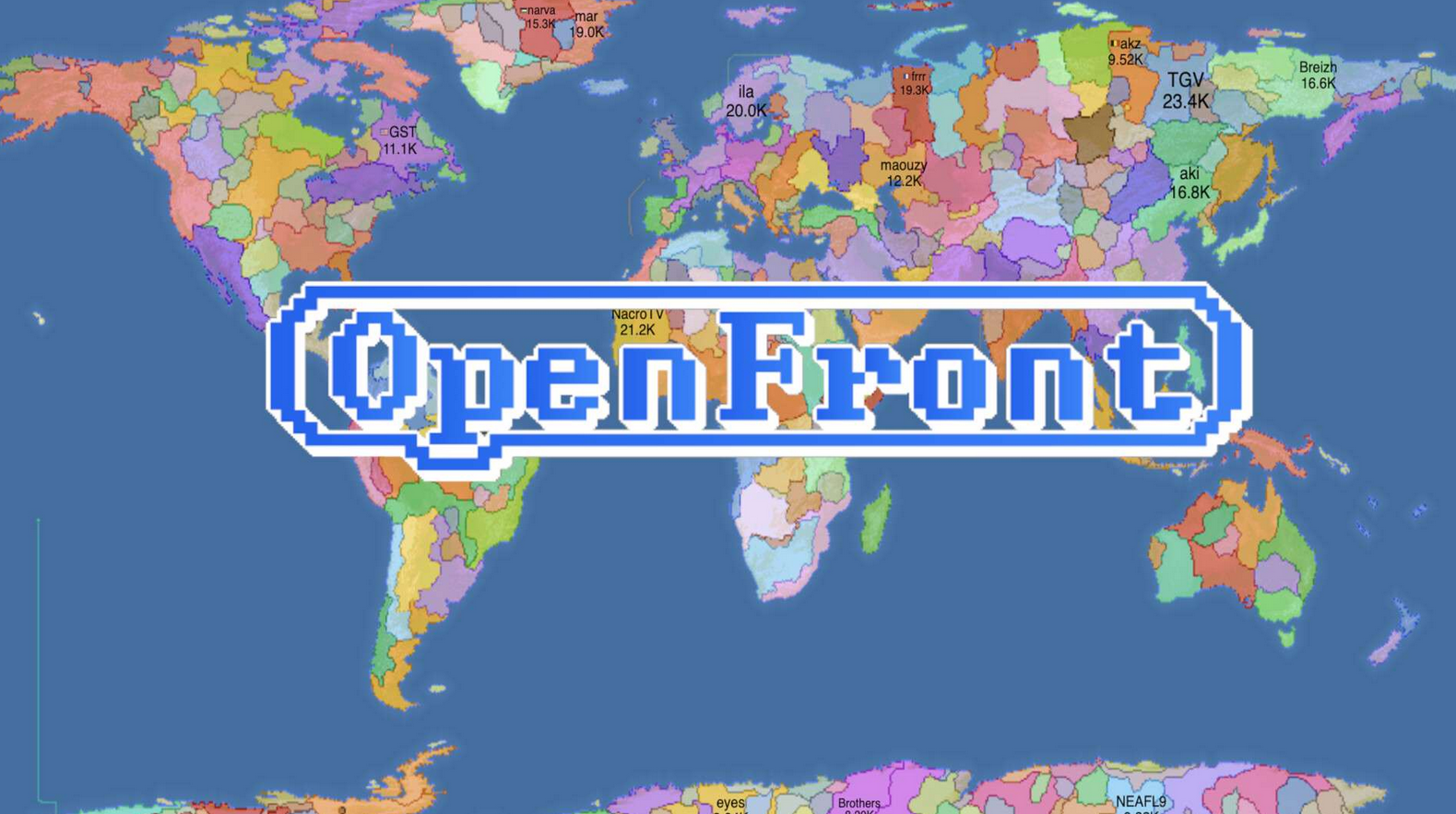
I launched OpenFront thinking it would be one of those quick browser games you play for a few minutes while waiting for something else. You know the type: simple mechanics, short rounds, maybe a little bit of strategy but nothing serious.
Thirty minutes later I was leaning forward in my chair like a military commander trying to defend my borders from three different directions.
So yeah… OpenFront escalated quickly.
For anyone who hasn’t tried it yet, OpenFront is a browser-based strategy game where players compete to control territory on a shared map. The interface is clean and minimal, which makes it feel approachable at first. But don’t let that fool you — once the map fills up with players, things get intense.
The First Few Minutes (Also Known as Confusion)
When the game begins, you start with a small piece of territory. At first I wasn’t entirely sure what I was doing. I saw nearby empty land, clicked on it, and suddenly my territory started expanding.
“Okay,” I thought. “That seems good.”
More land apparently means more production, which means more units. Those units allow you to expand further or attack other players. Pretty straightforward once you notice the pattern.
But here’s the catch: everyone else is doing the exact same thing.
And some of them are doing it much faster than you.
Within a few minutes I noticed a player nearby whose territory was growing like someone had pressed fast-forward on their expansion. That was the moment I realized this game wasn’t just about clicking random spaces on the map.
There was actual strategy involved.
The Moment the Game Clicked
After losing a couple of early matches (which happened faster than I’d like to admit), I started noticing something interesting.
Good players weren’t expanding randomly.
They were picking directions carefully. They avoided spreading themselves too thin. They also seemed to watch their neighbors closely, almost like a quiet standoff between rival empires.
Once I started paying attention to positioning instead of just grabbing land, things improved dramatically.
Instead of trying to take everything, I started building strong borders first. Suddenly my territory was easier to defend, and I wasn’t getting wiped out the moment someone attacked.
Why the Game Gets Addictive
One thing OpenFront does really well is pacing.
Matches develop gradually. At first it’s peaceful expansion. Then you start encountering neighbors. Borders form. Armies grow larger. Suddenly the entire map feels tense.
You never know exactly when someone will attack.
Sometimes two players get locked in a long battle while a third player quietly expands somewhere else. Other times the strongest player becomes the target of the entire map.
It’s surprisingly dynamic for a game that looks so simple.
Another thing I appreciated was how easy it is to jump back in after losing. Matches don’t drag on forever, so even if your empire collapses, you’re never waiting long to try again.
My Honest Beginner Verdict
I went into OpenFront expecting a small time-killer.
What I found instead was a surprisingly strategic multiplayer game that rewards patience and smart positioning more than frantic clicking.
- It’s easy to start playing.
It’s harder than it looks to master.
And the moment you start recognizing patterns — understanding when to expand, when to defend, and when to strike — the game becomes much more interesting.
I’m still not great at it. I still occasionally expand in the wrong direction and get surrounded by three players who clearly know what they’re doing.
But that’s part of the fun.
Because every new match feels like another chance to try a better plan.